
Here is the honest, short version: Morocco is one of the safer countries in North Africa to visit, violent crime against tourists is rare, and the real risk you will face is financial, not physical. That answer satisfies almost nobody on its own, so let me back it up properly, city by city and concern by concern, rather than leaving it as a single reassuring line.
What the real risks look like
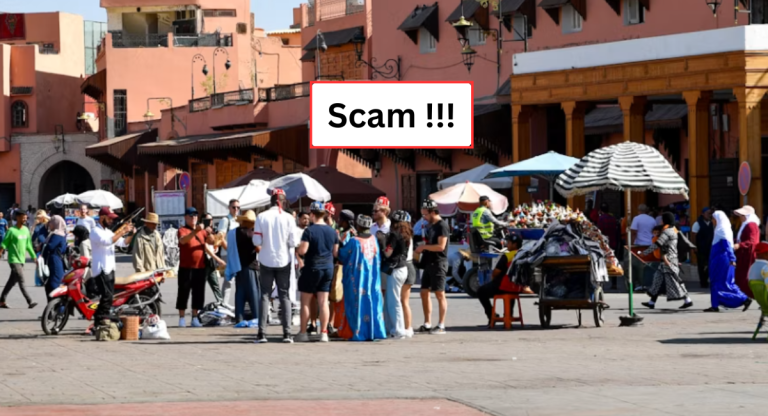
Petty theft, pickpocketing in crowded medinas and squares, happens here as it does in any popular tourist destination worldwide. Scams targeting confusion rather than force, fake guides, inflated taxi fares, pressure sales, are far more common than any physical threat, and we cover these in detail in our guide to common tourist scams. Violent crime against foreign visitors is rare enough that most Moroccans who work in tourism can go years without hearing of a real case, and the areas where it occurs at all are not the tourist routes most travelers ever come near.
Walking around, day and night
Main medina streets and tourist areas in Marrakech, Fès, and Chefchaouen are safe to walk during the day without much thought. At night, sticking to streets with other people around is a sensible habit anywhere, and the narrow, unlit alleys of an old medina can be seriously disorienting even for careful travelers, which is a navigation problem more than a safety one. Asking your riad staff which specific areas they would avoid after dark takes two minutes and is worth more than any generic advice, since it reflects the current, on-the-ground situation in that specific neighborhood, updated far more recently than a blog post like this one.
Traveling as a woman, a family, or a solo visitor
Morocco sees large numbers of solo female travelers every year, and the country’s tourism infrastructure has adapted accordingly, though street harassment in the form of unwanted comments does happen more here than some travelers expect, particularly in busier medinas. Dressing modestly, traveling with a private guide rather than navigating entirely alone, and a confident, unbothered manner reduce this considerably. A firm, short response, rather than an apologetic or drawn-out one, tends to end an unwanted conversation faster than engaging with it at length, a pattern that holds true in most cities regardless of country. Families find Morocco a warm place to travel, with children treated as guests rather than a burden nearly everywhere they go.
What to do if something does go wrong
Morocco has a tourist police unit, the Brigade Touristique, operating in Marrakech, Fès, Agadir, and other major destinations, specifically trained to handle visitor complaints and incidents. They are generally more responsive and better equipped to help a foreign tourist than a standard local police station, and staff at your riad or hotel can usually point you toward the nearest tourist police post if needed. For anything more serious, your country’s embassy or consulate in Rabat or Casablanca is the right first call, and registering your trip with your embassy before you travel, where that service is offered, makes it easier for them to reach you in an emergency.
Travel insurance covering medical evacuation is worth having regardless of destination, and Morocco is no exception. Healthcare in major cities is reasonably good, with private clinics in Marrakech and Casablanca handling most tourist medical needs competently, but rural areas and the desert have far less infrastructure, another reason a private driver-guide who knows the nearest reliable clinic on a given route adds real value beyond convenience.
What reduces risk, in order of impact
- Booking your first night’s accommodation before you land, so no one can improvise a fake “your riad is full” story at the airport
- Traveling with a private driver-guide rather than piecing logistics together alone in unfamiliar cities
- Agreeing on prices, for taxis, guides, and souvenirs, before the transaction starts
- Keeping valuables out of sight in crowded squares and markets
- Dressing to blend in reasonably rather than standing out as an obvious, unaccompanied target
Every scam and every safety concern on this list shares the same underlying condition: a tourist who is alone, unsure, and unfamiliar with a city. A licensed driver-guide removes all three at once, which is the practical reasoning behind every private tour we build, not a marketing point layered on afterward. Solo female travelers specifically should also see our Morocco tours for women page, built around exactly this concern.
Is Morocco safe for solo female travelers?
Yes, with the same practical precautions covered throughout this guide. Street harassment in the form of comments is more common than in some destinations, but serious incidents are rare, and a confident manner combined with modest dress reduces unwanted attention significantly.
Are there areas of Morocco tourists should avoid entirely?
The tourist routes through Marrakech, Fès, Chefchaouen, the Atlas Mountains, and the Sahara are all well-traveled and safe. Some border regions, particularly near Western Sahara and the Algerian border, carry travel advisories worth checking before planning a route through them specifically.
Is it safe to drink the tap water?
Bottled water is the safer, simpler default for visitors, and it is inexpensive and widely available. This is a stomach-comfort precaution more than a serious safety concern.
How does Morocco compare to its neighbors for safety?
Morocco is generally considered one of the more stable and tourist-friendly countries in North Africa, with a tourism industry that has operated at scale for decades and infrastructure built around visitor safety accordingly.
Is there a tourist police force in Morocco?
Yes, the Brigade Touristique operates in Marrakech, Fès, Agadir, and other major tourist destinations, specifically trained to assist foreign visitors with complaints or incidents.
Should I get travel insurance for a Morocco trip?
Yes, particularly insurance covering medical evacuation, the same sensible precaution worth taking for most international travel. Healthcare quality drops noticeably outside major cities, so coverage that includes transport to better-equipped facilities matters here.
Ready to lose yourself in Morocco?
Turn this into your own private, tailor-made adventure — from airport pickup to the last sunset.
Plan My Trip